
Feds deliver on promises to gun owners in 2A hostile states
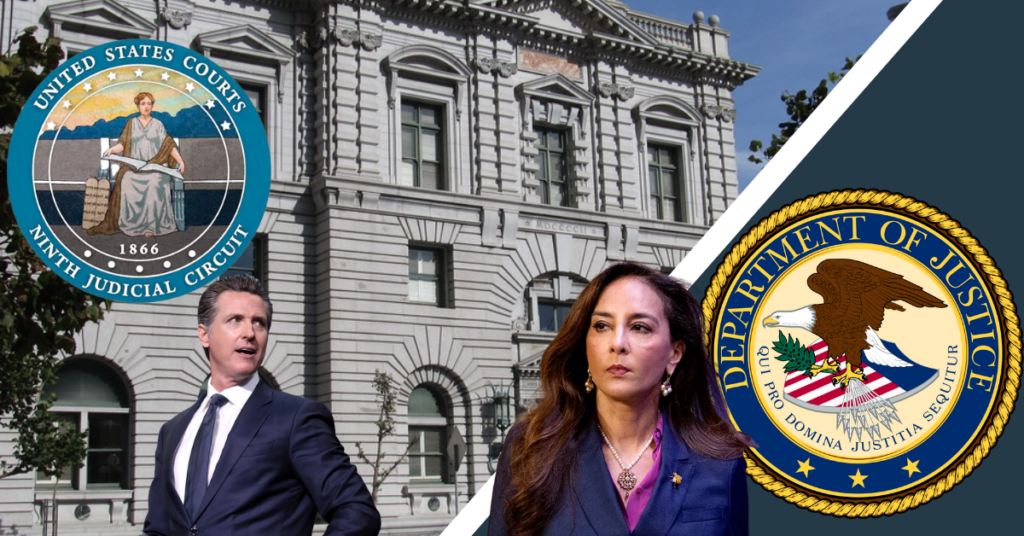
In a rare and consequential move, the federal government sides with gun owners and escalated its opposition to California’s gun-control regime by seeking to participate directly in the en banc oral argument before the U.S. Court of Appeals for the Ninth Circuit in Rhode v. Bonta.
The U.S. Department of Justice has filed a formal motion asking to argue alongside the challengers—placing the federal government in direct opposition to California in one of the most important Second Amendment cases currently pending in the Ninth Circuit.
This marks a significant step beyond routine amicus briefing and signals that the federal government is beginning to follow through on long-stated commitments to confront unconstitutional gun laws in states wuch as California.
Just months earlier, federal officials intervened in litigation challenging unlawful concealed-carry practices by the Los Angeles County Sheriff’s Department. Now, the federal government has taken the extraordinary step of seeking to stand at the lectern in a case that strikes at the heart of California’s firearms and ammunition restrictions.
The Case: Rhode v. Bonta
Rhode v. Bonta challenges California’s ammunition background-check scheme, which requires state approval before a lawful citizen may purchase ammunition.
At the center of the case is Kim Rhode, a six-time Olympic medalist and one of the most accomplished competitive shooters in American history. Despite her impeccable record and lifelong compliance with the law, Rhode was repeatedly denied or delayed when attempting to purchase ammunition needed for training and competition.
Rhode filed suit after encountering the same bureaucratic obstacles faced by ordinary Californians—arguing that ammunition is indispensable to the exercise of the Second Amendment and that California’s regime unlawfully burdens a core constitutional right.
How California Built the Ammunition Background Check System
California officials often claim voters approved the ammunition background-check system now in place. That claim is misleading.
The state’s ammunition regulations trace back to Proposition 63, a ballot measure approved in 2016. While Proposition 63 authorized regulation of ammunition sales and required purchasers to be legally eligible, it did not create the real-time, point-of-sale background check system Californians face today.
That system was later constructed through legislative action and DOJ rulemaking and did not fully take effect until July 1, 2019—nearly three years after the election. The resulting regime requires state approval for virtually every ammunition purchase and has produced widespread delays, erroneous denials, and barriers for lawful gun owners.
Gun Owners of California’s Position
Gun Owners of California has consistently maintained that ammunition background checks—and any permitting or approval system required to acquire ammunition—are flatly unconstitutional.
There is nothing in the text of the Second Amendment, and nothing in the history or tradition of this nation, that permits the government to condition the purchase of ammunition on prior approval by the state.
At the founding, Americans were free to acquire arms and ammunition without licenses, permits, or background checks. Ammunition was commonly bought, sold, traded, and possessed without government interference. California’s modern scheme has no historical analogue and cannot survive constitutional scrutiny under the Supreme Court’s Bruen framework.
A right that depends on state permission is not a right—it is a privilege. California’s ammunition background-check regime transforms a fundamental constitutional guarantee into a government-controlled privilege, in direct violation of the Constitution.
Why Federal Participation Matters
The federal government taking sides via amicus briefs is a common practice. Amicus oral argument is not.
By asking to participate directly in en banc oral arguments, the Civil Rights division of the DOJ is signaling that California’s ammunition background-check system is not merely questionable policy, but constitutionally indefensible.
If the Ninth Circuit grants the motion, the United States will stand opposite California before the full court—an extraordinary posture in a Second Amendment case and one that underscores the national importance of the issues at stake.
What Comes Next
The Ninth Circuit has scheduled en banc oral argument in Rhode v. Bonta for the week of March 23, 2026. Whether the court grants the DOJ’s request to argue remains pending, but the motion itself marks a watershed moment.
California is no longer defending its ammunition laws solely against gun owners and civil rights organizations—it is now defending them against the federal government.
Gun Owners of California will continue to fight this unconstitutional scheme until the rights of law-abiding Californians are fully restored. If you want to stand on the front lines of our efforts in fighting California’s unconstitutional gun control schemes, please consider making a donation HERE.